Generate clean power & reduce electricity costs
Efficient on-grid solar systems designed for homes, businesses, and commercial spaces — seamlessly connected to the utility grid for maximum savings, reliable performance, and long-term energy benefits.

Book a FREE Consultation
Talk to a Gigatron solar expert. No pressure, just honest advice.
Your Solar Journey, Simplified
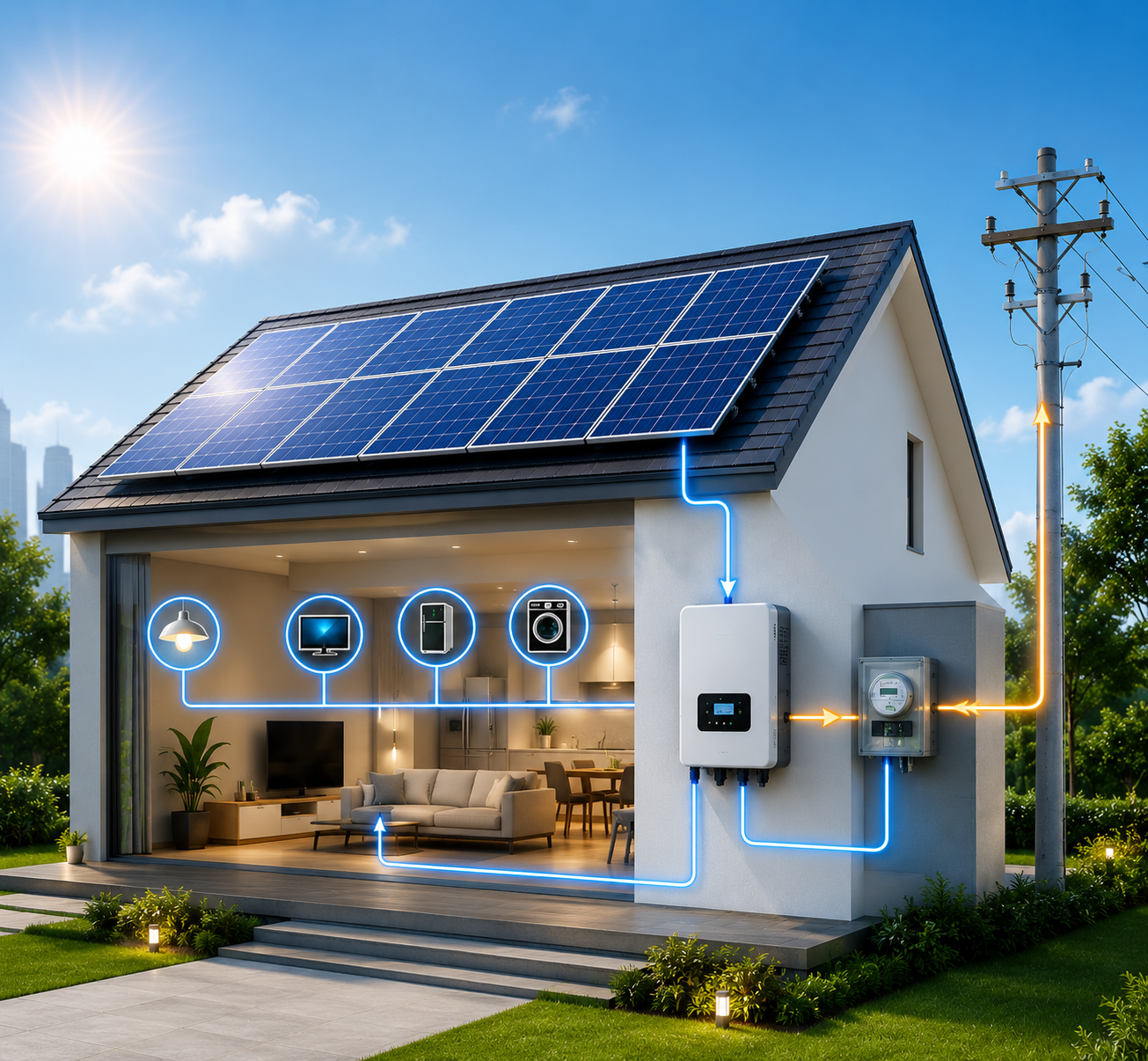
On-grid solar systems are the most efficient and cost-effective way to reduce electricity expenses for homes, businesses, and commercial establishments. These systems are directly connected to the utility grid, allowing you to generate clean solar power during the day and seamlessly draw electricity from the grid when required. Any excess energy produced is exported back to the grid through net metering, helping you earn credits and maximize savings. With lower installation costs, minimal maintenance, and no need for battery storage, on-grid solar offers a reliable, sustainable, and long-term solution for reducing energy bills and supporting a greener future.
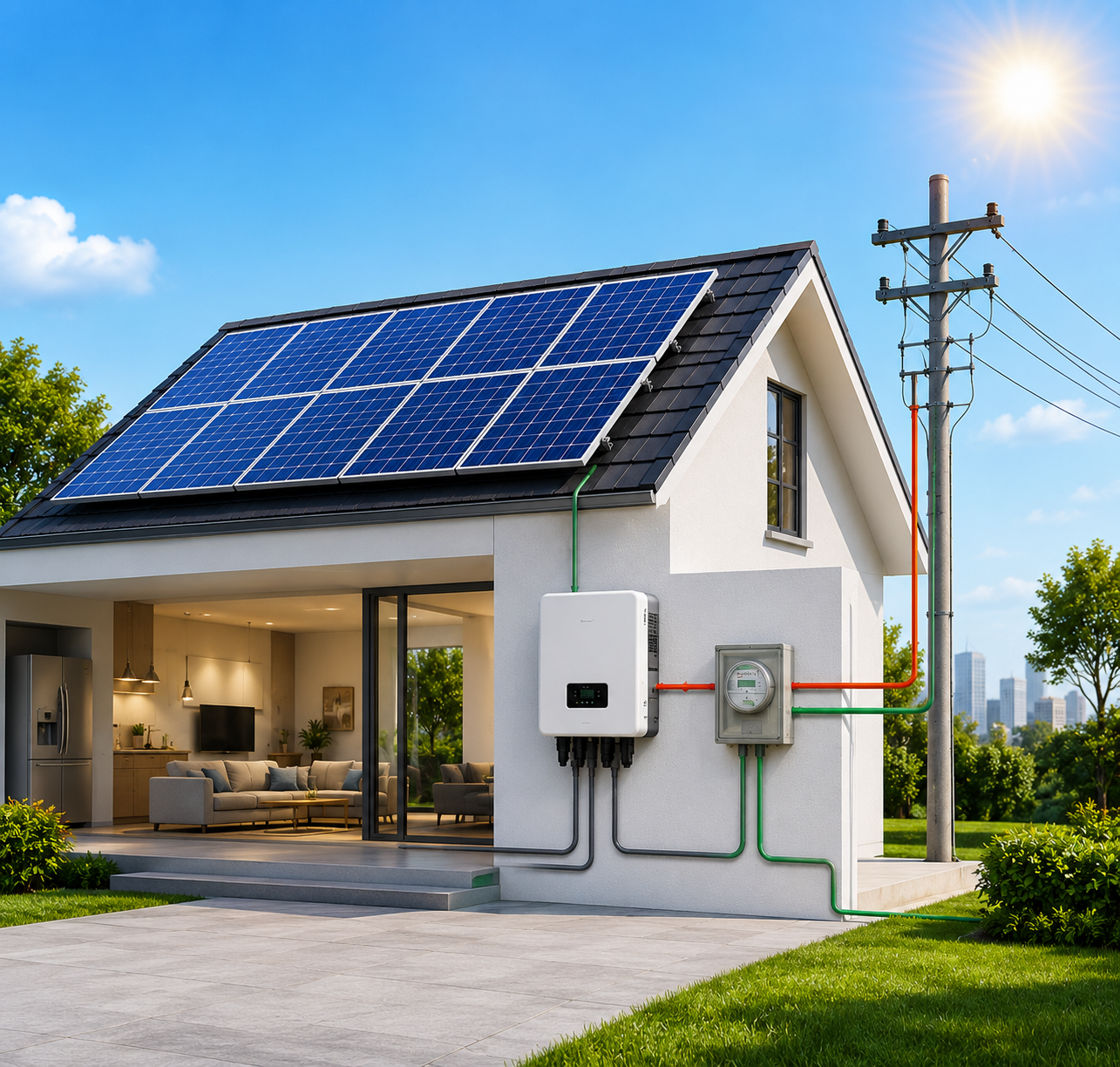
Overview of on-grid solar systems by Gigatron Energy
Gigatron Energy · Rooftop Solutions
On-Grid Solar
Systems Overview
Grid-tied solar systems connected directly to the utility grid — the preferred choice for Indian households with reliable grid access.
System Components
Every on-grid rooftop installation is built around five core elements working in harmony to deliver clean, grid-synced power.
Ideal For
Independent homes and housing societies with a monthly electricity bill of ₹1,500 – ₹3,000, typically requiring 2 to 3 kW capacity.
Solar Panels
Solar Inverter
Mounting Structures
Bi-directional Meter
Solar Accessories
Government Subsidy Structure
| Monthly Consumption | System Capacity | Subsidy Available |
|---|---|---|
| 0 – 150 units | 1 – 2 kW | ₹30,000 – ₹60,000 |
| 150 – 300 units | 2 – 3 kW | ₹60,000 – ₹78,000 |
| 300+ units | Above 3 kW | ₹78,000 |
On-Grid Solar FAQs
An On-Grid Solar System is a solar power system connected directly to the utility electricity grid. It generates electricity from sunlight and supplies power to your home or business while exporting excess energy to the grid through net metering.
Solar panels convert sunlight into direct current (DC) electricity, which an inverter converts into alternating current (AC) for everyday use. Any excess electricity produced is sent to the utility grid, and power is automatically drawn from the grid when solar generation is insufficient.
No. For safety reasons, a standard on-grid solar system automatically shuts down during a power outage to protect utility workers. If backup power is required, a Hybrid Solar System or Battery Energy Storage System (BESS) is recommended.
An on-grid system helps reduce electricity bills, lowers carbon emissions, requires minimal maintenance, offers a quick return on investment, and allows you to earn credits through net metering by exporting surplus electricity to the grid.