Off-Grid Solar System: Complete Energy Independence
Access to reliable electricity can be challenging in remote areas or locations that experience frequent power interruptions. An off-grid solar system provides an independent energy solution by generating electricity from sunlight and storing energy for later use.
Unlike grid-connected systems, off-grid solar installations are designed to operate independently from the utility electricity network.
What Is an Off-Grid Solar System?
An off-grid solar system is a standalone renewable energy system that generates and stores electricity without depending on the public electricity grid.
During daylight hours, solar panels generate electricity to power connected loads. Surplus solar energy can be stored in batteries and used when solar generation is unavailable or insufficient.
Because the system must meet the user’s electricity requirements independently, accurate system design and battery sizing are extremely important.
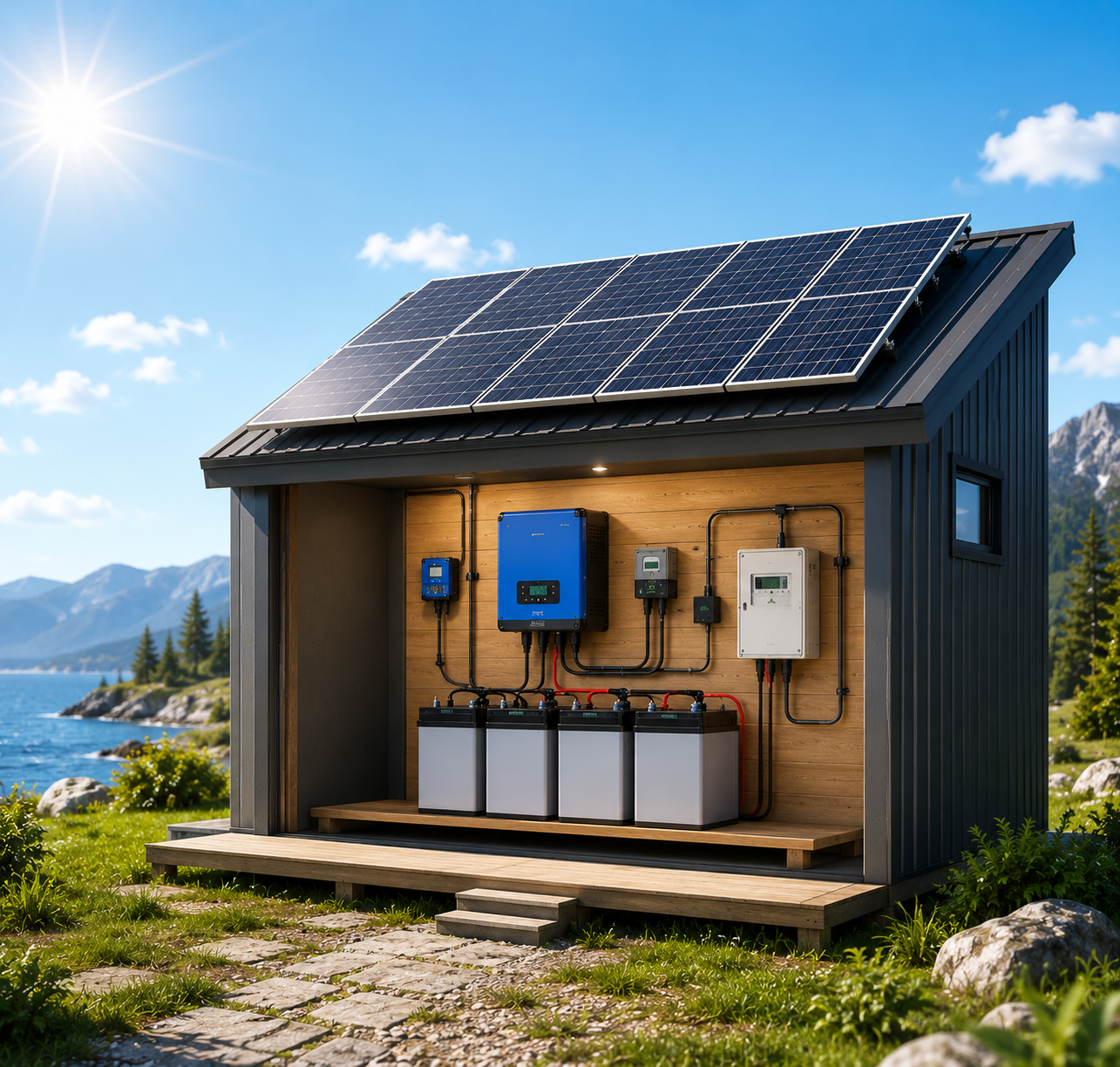
Main Components of an Off-Grid Solar System
Solar Panels
Photovoltaic panels capture sunlight and convert solar radiation into DC electricity.
Solar Inverter
The inverter converts electricity into a form suitable for operating common appliances and electrical equipment.
Battery Storage
Batteries store surplus solar electricity so it can be used at night, during cloudy conditions or when energy demand exceeds current solar generation.
Charge Controller
The charge controller manages the charging process and helps protect batteries from inappropriate charging or excessive discharge.
Mounting and Protection Equipment
A professionally installed system also includes mounting structures, cables, isolators and electrical protection equipment.
Advantages of Off-Grid Solar
Energy Independence: Generate and store your own electricity without depending entirely on the utility network.
Power for Remote Locations: Solar can provide electricity where extending conventional grid infrastructure may be difficult or expensive.
Battery Backup: Stored electricity provides power when sunlight is unavailable.
Reduced Generator Dependence: A properly designed solar system can reduce reliance on diesel generators and associated fuel expenses.
Clean Energy: Solar power provides electricity from a renewable resource and helps reduce dependence on conventional fuels.
Where Are Off-Grid Systems Useful?
Off-grid solar can be suitable for:
- Remote homes and farmhouses
- Agricultural applications
- Rural facilities
- Telecom infrastructure
- Remote commercial establishments
- Resorts and cottages
- Construction sites
- Locations with unreliable electricity supply
Importance of Correct System Sizing
An off-grid system must be designed according to actual energy consumption. Installing insufficient solar capacity or battery storage can result in inadequate backup, while oversizing the system can unnecessarily increase project costs.
Daily electricity usage, peak load, operating hours, required backup duration, available sunlight and future expansion requirements should therefore be evaluated before installation.
Choose Reliable Off-Grid Solar Solutions
Gigatron Energy develops customized solar solutions based on individual energy requirements. Our approach includes assessment, planning, installation and ongoing support to help customers achieve dependable and efficient solar power.
Wherever the grid ends, solar energy can keep powering possibilities.