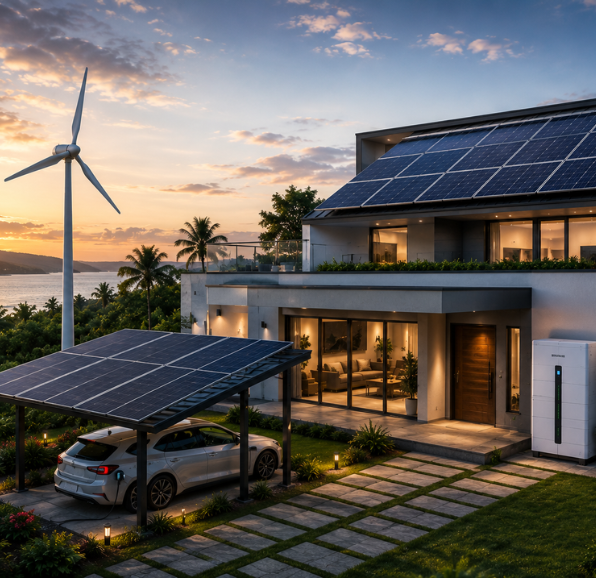
Generate clean power & reduce electricity costs
Efficient Hybrid-grid solar systems designed for homes, businesses, and commercial spaces — seamlessly connected to the utility grid for maximum savings, reliable performance, and long-term energy benefits.

Book a FREE Consultation
Talk to a Gigatron solar expert. No pressure, just honest advice.
Your Solar Journey, Simplified
Hybrid-grid solar systems are the most efficient and cost-effective way to reduce electricity expenses for homes, businesses, and commercial establishments. These systems are directly connected to the utility grid, allowing you to generate clean solar power during the day and seamlessly draw electricity from the grid when required. Any excess energy produced is exported back to the grid through net metering, helping you earn credits and maximize savings. With lower installation costs, minimal maintenance, and no need for battery storage, on-grid solar offers a reliable, sustainable, and long-term solution for reducing energy bills and supporting a greener future.
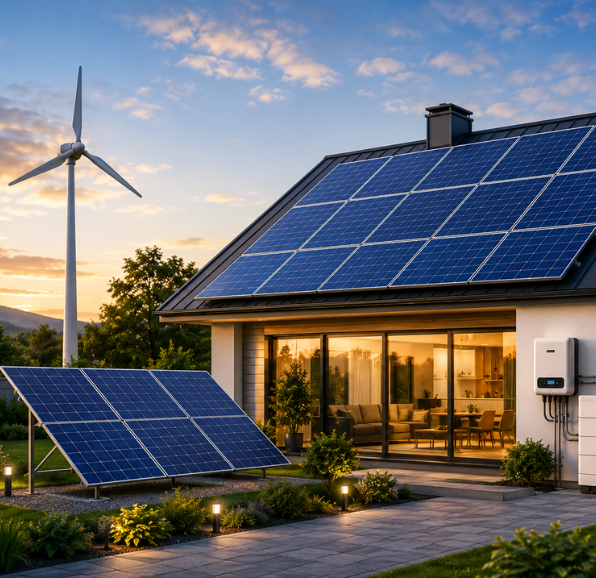
Overview of hybrid solar systems by Gigatron Energy
Gigatron Energy · Rooftop Solutions
Hybrid Solar
Systems Overview
Grid-tied solar systems with battery backup — combining the savings of grid export with uninterrupted power during outages.
System Components
Every hybrid rooftop installation combines six core elements to deliver grid-synced power along with reliable battery backup during outages.
Ideal For
Homes and businesses in areas with frequent power cuts, needing backup for essential loads alongside a monthly bill of ₹2,000 – ₹5,000.
Solar Panels
Hybrid Inverter
Battery Bank
Mounting Structures
Bi-directional Meter
Solar Accessories
Battery Backup Options
| System Capacity | Battery Capacity | Typical Backup |
|---|---|---|
| 3 – 5 kW | 5 – 10 kWh | 4 – 6 hours (essential loads) |
| 5 – 7.5 kW | 10 – 15 kWh | 6 – 8 hours (extended loads) |
| 7.5+ kW | 15+ kWh | 8+ hours (full home backup) |
Hybrid Solar FAQs
A hybrid solar system combines the benefits of on-grid and off-grid setups. It generates power from solar panels, stores surplus energy in a battery bank for later use, and stays connected to the utility grid as a backup. This means you can use solar power first, draw from batteries when the sun isn't out, and fall back on the grid only if needed.
An on-grid system has no battery and shuts off during outages. An off-grid system has no grid connection at all and relies entirely on batteries. A hybrid system takes the middle path — it has battery backup like an off-grid system, but also stays grid-tied so you can export excess power or draw from the grid when your battery runs low, giving you flexibility and outage protection together.
Yes. Unlike a standard on-grid system that switches off automatically for safety during a grid failure, a hybrid inverter isolates itself from the grid and continues supplying power from solar and battery storage. This backup function is one of the main reasons homes and businesses choose hybrid over plain grid-tied systems.
In most cases, yes. Since the hybrid inverter stays connected to the grid, any surplus solar power left after charging your battery and running your loads can still be exported under your local net metering policy. Some utilities apply specific rules for battery-backed systems, so it's worth checking your local DISCOM guidelines during design.
It depends on how often you face outages and how much backup you need. Hybrid systems cost more upfront because of the battery bank, but they pay off through uninterrupted power during cuts, reduced dependence on diesel generators, and the ability to store cheap solar energy for evening use instead of drawing expensive grid power at peak tariff hours.